By Matt Siredzuk, Sales Director Oceania, Smartstream
A Shifting Conversation in Asset Management
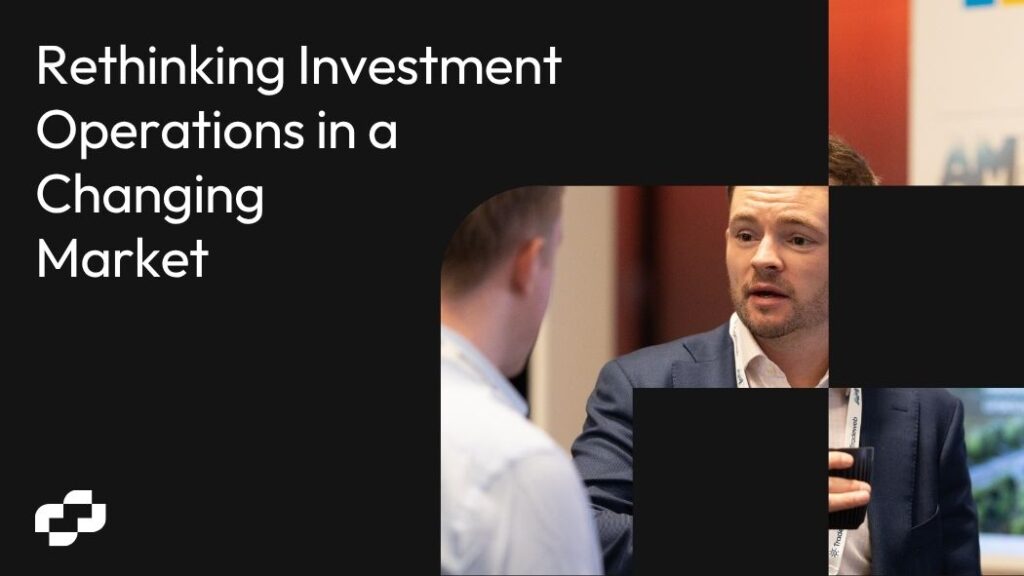
Having attended the second AM Tech Day APAC in Sydney last week, one thing stood out clearly. The conversation around technology in asset management has moved on. It is no longer about adding new tools, but about how firms bring together data, processes and platforms to operate with greater clarity and control.
Across discussions with practitioners from asset managers and superannuation funds, there was a consistent theme. The pressure on investment operations is increasing, but more importantly, it is becoming more complex. For many years, the focus was on efficiency. Streamlining workflows, reducing manual effort and managing cost. Those priorities remain, but they are now being combined with new expectations. Firms are being asked to deliver faster decisions, more transparent processes, better use of data and stronger operational resilience, all at once.
This creates a set of real operating tensions.
- Where should speed take priority, and where must control remain firmly in place?
- How do firms increase automation without losing visibility?
- And how do they connect fragmented data and systems without introducing additional risk?
Operating Models Under Pressure
These questions sat at the centre of several discussions throughout the day, particularly in sessions focused on operating model design and post-trade transformation. Many operating environments today were built for stability. Processes were designed to be controlled, repeatable and cost-efficient. However, as transaction volumes grow and data becomes more distributed, these models are being stretched. Exceptions remain a persistent challenge, often requiring manual investigation across multiple systems, even in highly automated environments.
The Evolving Role of AI in Operations
In this context, the role of technology is also evolving. AI was a prominent topic across the event, from trading strategies to portfolio analytics and post-trade operations. What is becoming clearer is that its value lies less in isolated use cases, and more in how it supports end-to-end operational workflows. Rather than replacing existing systems, AI is increasingly seen as a way to enhance how data is interpreted and acted upon. It can help identify patterns, prioritise issues and support faster resolution of operational breaks. The objective is not simply automation, but a more controlled and informed operating environment.
Superannuation Funds and the Path to Integrated Operations
A particularly relevant discussion at the conference centred on superannuation funds. As the sector continues to grow, consolidate and scale, operating model complexity is increasing significantly. Mergers introduce multiple systems, data structures and processes that need to be aligned. At the same time, funds are expected to deliver strong member outcomes, maintain robust governance and manage costs with discipline, alongside meeting regulatory expectations such as CPS 230 around operational resilience and risk accountability. This combination places data at the centre of the challenge. Consistency, accuracy and timeliness of data are critical, not only for reporting and compliance, but for day-to-day operational decision-making. Without a clear and unified view, processes become harder to manage and risks become more difficult to detect. Several conversations highlighted that the issue is often not the absence of technology, but the lack of cohesion across it. Data remains fragmented, workflows are not always fully connected and exceptions require teams to manually piece together information from different sources. As a result, operations teams spend more time investigating than controlling. What leading firms are starting to prioritise is a more integrated approach to operations. One where data is connected across the lifecycle, processes are more transparent and control is embedded into the workflow itself. This is where the conversation shifts. The next phase of transformation is not just about doing things faster, but about operating with greater intelligence. Providing teams with the context they need to understand issues earlier, act more effectively and maintain control as complexity increases.
For superannuation funds, this is particularly important. As scale continues to increase, so does the need for operating models that can support growth without compromising governance or cost discipline. The discussions at AM Tech Day reflected an industry that is actively working through these challenges. The direction is clear. The differentiator now will be how effectively firms turn that into operational reality.
How Smartstream Supports the Journey to Integrated Investment Operations
At Smartstream, we work with asset managers and superannuation funds to address exactly these challenges, bringing together fragmented data and workflows, reducing manual investigation and enabling operations teams to act earlier, with greater control and confidence. Smart Reconciliations, our reconciliations solutions suite, is built to support firms at every stage of that journey. The firms making progress are those treating this not as a technology project, but as an operating model transformation.