By Thejaswi Gopal, Vice President, Client Engagement, Delivery and Governance (Smart Fees), Smartstream
On 16 June at FIA IDX 2026, a panel of exchange leaders sat down to work through a question that European financial markets have been circling for years: how does Europe stay competitive as derivatives markets are reshaped by consolidation, AI, and structural change?
The panel was excellent. Baroness Kay Swinburne moderated with authority, and the leaders from Eurex, Euronext London, LCH SA, ICE Futures Europe, and BNP Paribas brought genuine candour to a conversation that could easily have stayed diplomatic. But sitting in the room as someone who works daily with the operational infrastructure behind European derivatives, I kept noticing a thread that connected almost everything they said and stayed just below the surface throughout: data infrastructure. Until that gets addressed, the rest of the agenda stalls.
Fragmentation Has an Operational Layer That Rarely Gets Named
The panel’s framing on fragmentation was correct. Europe’s derivatives exchanges operate under different rules across 27 jurisdictions. Instruments listed on multiple venues are not fungible. Currency mismatches add cost. US capital market liquidity is roughly four times greater than Europe’s, partly because households there hold a far higher proportion of their wealth in financial securities.
But the fragmentation problem has an operational layer that compounds the regulatory one. Each exchange publishes reference data, trade data, and clearing instructions in different formats. When a bank integrates with multiple European venues, it must maintain separate data mappings for each exchange’s schema. Exchange fee structures follow the same pattern: every venue has its own billing logic, rate schedules, and invoice formats. Reconciling exchange fees across a multi-venue derivatives operation is a manual, error-prone process that scales badly.
That is not a minor inconvenience. It is a cost multiplier that slows every subsequent initiative, including AI adoption. When CME and CBOT merged, customers saved significantly through the elimination of duplicative order routing and data connections. That benefit did not come from lower fees; it came from unified data infrastructure. Europe is pursuing regulatory harmonisation without yet making the same commitment to data standardisation, and the two need to move together.
Principle-Based Regulation Reduces Compliance Overhead
The panel made a point worth amplifying: the US does not dominate derivatives markets through lighter regulation. It dominates through consolidation. Regulation that is complex but consistently applied across one market is cheaper to build for than 27 variations of the same rule.
The example that stuck with me was energy market regulation. European regulators chose a principle-based approach for the ICE TTF gas benchmark, avoiding prescriptive intervention that could have damaged market functionality. That is the direction of travel that works. Not fewer rules, but clearer ones that let firms find their own path to compliance rather than building around specific national interpretations.
From an operational standpoint, regulatory clarity is cheaper than regulatory volume. A single, well-defined requirement across jurisdictions reduces the compliance overhead that currently sits inside every European bank running cross-border derivatives operations and adds directly to post-trade operating costs.
The Real AI Prerequisite Is Being Skipped
The panel’s AI discussion was sharp. The observation that judgment is now the scarce resource, not data, is exactly right. The firms getting genuine value from AI are those using it to detect weak signals early: operational friction accumulating, liquidity shifting, correlations changing in ways that would take humans too long to notice.
What did not get said is what makes that possible. AI built on incomplete or inconsistently structured data does not detect weak signals. It finds the same breaks a spreadsheet would have found, at enterprise cost. The real constraint is not model quality. It is that the entire trade lifecycle has been designed with humans correcting data problems downstream. Operations receives incomplete data and fixes it manually. AI sits on top of that, and the output reflects the input.
There is also a cost discipline shift underway that the panel touched on briefly: on-premises AI is proving significantly cheaper than cloud-based token consumption at scale. Firms that moved fast in 2025 are now consolidating toward purpose-built models for specific use cases, because the economics of general-purpose cloud AI at scale are not working. The firms that will get genuine value from their derivatives operations are those that treat data quality as the prerequisite, not the afterthought.
Collateral Efficiency Is the Underused Capital Lever
One of the panel’s more practical observations concerned capital constraints. US banks are committing significant capital to European fixed income. The opportunity for European participants is not to find more capital; it is to remove balance sheet pressure through better collateral mobility and margin optimisation.
Real-time collateral mobilisation, cross-CCP netting, and haircut optimisation reduce capital consumption without waiting for regulatory relief. AI has a specific role here: identifying suboptimal collateral allocation patterns and flagging opportunities for offset or margin reduction. But it requires clean, transparent data about what collateral sits where, what the haircuts are, and what positions need coverage. Again, the data layer is the enabler. There is no shortcut around it.
Where Fee Management Fits the Bigger Picture
The through-line across every topic the panel covered is that firms with clean, standardised, well-governed data will move faster on all of it: AI adoption, collateral optimisation, extended trading hours, new product support. The firms still managing fragmented data across venues will keep paying the operational tax.
Nowhere is that tax more visible than in derivatives fee management. Operating across multiple European venues means dealing with a different billing structure at every one. Rate schedules change. Invoices arrive in different formats. Reconciling what you have been charged against what you expected to pay is time-consuming, and billing errors go undetected for longer than they should. As European market structure evolves and firms trade across more venues, that complexity only grows.
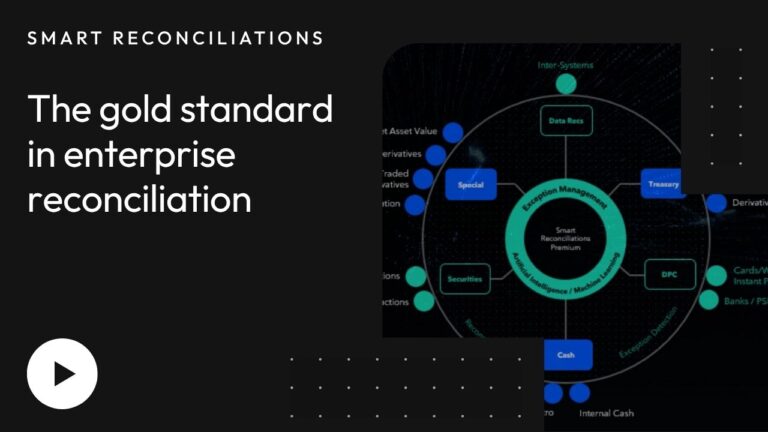
Smart Fees is Smartstream’s fee management solution, built to automate the reconciliation and management of exchange, broker, and counterparty fees across complex multi-venue operations. It gives firms the visibility and control to catch billing errors, reduce manual overhead, and keep pace as fee structures across European derivatives markets continue to shift.
We work with 70 of the top 100 banks globally. The pattern is consistent: the operations that move fastest on innovation are the ones that have already solved the data discipline problem underneath.
If you would like to discuss how Smartstream can support your fees and expense management operations, get in touch.